Review: Mr. Mercedes by Stephen King

Mr Mercedes (Bill Hodges Trilogy, #1)Mr Mercedes by Stephen King
My rating: 3 of 5 stars

Mr. Mercedes by Stephen King starts off with a horrendous crime. A man drives a large Mercedes into a group of people waiting to go into a jobs fair. It is an effective, if gruesome start to our story. There are two main POV characters. We spend time with Bill Hodges, a decorated police detective, now retired and slowly going to seed. We also get to know, perhaps a bit too well, the Mr. Mercedes from the title. He is a man with issues, a freudian delight. The two, protagonists, linked by the crime from the opening chapter, taunt, circle and torture each other throughout the book.

There isn’t any mystery as such. We know exactly who the killer is. The book is about the thrill of the game of cat and mouse that Bill and Mr. Mercedes play. It is difficult to tell who exactly is who is the hunter and who is the hunted – and this is the joy of the book. We are joined by a number of other characters. Bill is assisted by his neighbour Jerome, a precocious and talented teenager and Holly, a brilliant, if neurotic woman with a link to the original crime.

The plot moves along nicely, with the tension building to an explosive finale.

So why the three stars?

If I were to compare Mr. Mercedes to a restaurant, it would be Pizza Express. You know exactly what you will get as soon as you enter the door. The experience is predictable, but enjoyable and is good value. Faint praise perhaps – but this is not a challenging book. It is enjoyable, and I found it hard to put it down, but I doubt it will stay with me for any longer than a Pizza Express meal does.

What I liked:
– The setting: The book is set in an unnamed mid-western town at the tail end of the Great Recession. Jobs are scarce, and people work multiple jobs to make ends meet
– The pace: Things move fast in this book. The book covers events in a two week period, and a lot of stuff happens!
– The humour: Stephen King has always a been a funny writer. Even in this vanilla thriller, there are nuggets of comedy that made me laugh out load.

What I didn’t like:
– The characters: The bad guy is a cliche – a loner with mommy issues and technical skills. Each character has problems. Vivacious divorcee – check; precocious minority teenager – check; Neurotic middle aged woman with mental problems – triple check!
– The plot: Things happen (death, love, murder) very quickly and characters make decisions that do not make sense given what we know about them.

Mr. Mercedes is the first of the “Bill Hodges” trilogy, with “Finders Keepers” the second and a third in the pipeline.

View all my reviews

Buy Mr. Mercedes from Amazon (affiliate link):

Review: The Long Way to a Small, Angry Planet by Becky Chambers

The Long Way to a Small, Angry PlanetThe Long Way to a Small, Angry Planet by Becky Chambers
My rating: 4 of 5 stars

I read “The Long Way to a Small, Angry Planet” (TLW) in one sitting on a long flight. At the time, it felt like a particularly enjoyable story arc from Star Trek TNG or perhaps a binge session of Firefly. A week or so later, I keep thinking about the book, about the characters and about the patched up freighter and far flung moons with their plucky and weird colonists that inhabit TLW.

After the first chapter, I thought the book would centre around Rosemary and her journey from desperate runaway to some sort of ass kicking space warrior-scribe. I was wrong. The book is not just about Rosemary but about the entire crew of the Wayfarer and there is little in the way of ass-kicking. The pacifist captain, the rambunctious techs, mysterious navigator(s) and all the other colourful (literally in a few cases) characters that inhabit TLW have depth and agency.

The plot revolves around a long journey undertaken by the Wayfarer, a sort of space highway construction ship, to the Small Angry Planet of the title. Along the way, we visit markets, colonies, and planets while getting to know the crew and how the universe of the book works. The structure of the book may be conventional, yet it has a lot of say about gender, identity, violence and coming to term with one’s past. TLW is open about its politics: the captain of the Wayfarer is a pacifist, the doctor comes from a species that chose voluntary extinction after a decades of brutal warfare, and my favourite character has to consciously tone down her affection for her human crew mates because we are so weird about public displays of affection. Even the most curmudgeonly character has redeeming features.

TLW may not seem appealing if you like your science fiction to be of the military variety, or if you are a fan of hard science fiction from the likes of Alistair Reynolds. It certainly is different to the usual science fiction books I read, but I found it rewarding. Ms. Chambers clearly cares deeply about the Universe and the characters she has created. There is none of the nihilism and little of the violence that can be off putting about a lot of modern science fiction. TLW is character driven and while there are a few expository data dumps, things never get tedious.

I look forward to more books by Ms. Chambers and am glad that she is currently working on a companion piece that is set in the same Universe as TLW. A strong recommend from me.

View all my reviews

Buy The Long Way to a Small, Angry Planet from Amazon (affiliate link):
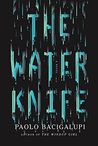
Review: The Water Knife by Paulo Bacigalupi

The Water KnifeThe Water Knife by Paolo Bacigalupi
My rating: 3 of 5 stars

The Water Knife is a lives up to its title: it’s a sharp, mean and violent story set in a grim near future US on the verge of civil war over water. The story unfolds in Phoenix, Arizona as the water runs out and the city is taken over by psychotic gang bangers, corrupt company men and desperate refugees from Texas (the “Merry Perrys”).

We follow three characters as they make their way through the dust choked ruins of Phoenix. Angel is a “Water Knife” for Las Vegas. His job is to make sure the taps do not run dry in his boss’s lush futuristic condos in the Vegas desert. We also meet Lucy, a journalist documenting the collapse of Phoenix (she even has her own #PhoenixDownTheTubes hash tag). Finally we spend some time with Maria, a Texan teenager living in one of many refugee camps policed by sociopathic gangsters (they keep Hyenas!). The three character arcs are connected by, of course, water. Or more specifically papers that will bestow senior rights to a serious amount of water in Arizona.

The Water Knife is kinetic, violent, and very grim. There are graphical descriptions of death, torture and mutilation. I am a big fan of Paolo Bacilagupi’s adult fiction and really enjoyed The Windup Girl. This book is in a similar dystopian vein, but left me disappointed. The writing is good, and the plot kept me going. However, I felt like I was reading a script of an apocalyptic science fiction film, perhaps a futuristic remake of Chinatown, as opposed to reading a book. Key plot points are telegraphed and the book lacked suspense or tension between the bullet and blood strewn set pieces.

I liked the book despite the criticisms above. Fans of The Windup Girl and the short stories in Pump Six will find much to enjoy here, but I can’t help but feel that there was much more to explore in this dystopian setting.

View all my reviews

Review: Slow Bullets by Alastair Reynolds

Slow BulletsSlow Bullets by Alastair Reynolds
My rating: 3 of 5 stars

Review based on a copy received from NetGalley and Tachyon Publications

Alastair Reynold’s Slow Bullets is a novella exploring issues of identity, memory and revenge. There are echoes of Iain Bank’s The Use of Weapons as well as some of the ideas explored in the Poseidon’s Children trilogy. The tone and setting of Slow Bullets is quite different to that of the gothic space opera (Revelation Space) or generation spanning science fiction (Poseidon’s Children).

The majority of the action is set on the prison transport Caprice as it recovers from a calamitous malfunction. The novella’s protagonist Scur and her fellow passengers awaken from hibernation to find the ship in orbit around a frozen planet and suffering from an acute case of bit rot.

Caprice’s passengers include war criminals from the two opposing religious factions. The war was over and a cease fire declared as the ship set off on it’s ill fated mission. As the ship’s systems fall apart, Scur and her fellow passengers have to deal with religious tensions, long simmering vendettas, as well as figuring out how to preserve millennia’s worth of cultural and scientific knowledge.

I quite enjoyed Slow Bullets. However, it feels more like a short story that was extended to a novella than a novel’s worth of ideas condensed to the shorter format.

View all my reviews

Review: Station Eleven by Emily St. John Mandel

Station ElevenStation Eleven by Emily St. John Mandel
My rating: 4 of 5 stars

Station Eleven is a book that cannot be categorised easily. Is it science fiction? Is is literary fiction? Is it post-apocalyptic fiction? It is all of the above, and yet it does not conform to the tropes of genre fiction.

The apocalyptic event – a pandemic caused by a highly infectious and deadly strain of flu straddles the two main plot arcs in Station Eleven. Before the end of the world as we know it, we follow the life (in reverse) of Arthur Leander, a famous actor, now in his middle ages and playing Lear on stage. The second, post collapse arc, follows Kirsten Raymonde an actor with the Travelling Symphony as it moves between small settlements on the shores of Lake Michigan performing Shakespeare, playing classical music and avoiding trouble as best as they can.

Reviews on Goodreads, and on other similar sites are full of quotes from the book, and for good reason. Emily St. John Mandel’s prose has a simple, descriptive style that manages to convey both the beauty and the desolation of her post apocalyptic world. We find beauty and grace in burnt out houses, dark forbidding forests and abandoned rust streaked airplanes parked nose to tail at the airport, going nowhere. There is danger in the form of “The Prophet” and his followers as they stalk the Travelling Symphony. Yet, this book is not like The Stand or perhaps Justin Cronin’s The Passage. The minutiae of survival and self defence are ignored as the book focuses on the emotional impact of societal collapse on those that lived through it and those that were too young to remember the world as it was but are surrounded by the decaying scaffolding of civilisation.

The book is a meditation on art and, in a sense, of mortality. Arthur Leander, in some ways the central character of this book is not remembered for his films or his wealth. He lives on through small acts of generosity, giving the eponymous “Station Eleven” comic book to Kirsten when she was a child, or through photographs and articles in decaying gossip magazines.

So why 4 out of 5 stars? Despite the beautiful writing, I found myself skimming passages. Arthur Leander was a fabulously wealthy, successful actor and serial divorcee, but not a particularly interesting character. There are almost too many characters and side plots that don’t seem to add much to the story. I found myself impatient to go back to the Travelling Symphony and to Kirsten as they made their way around post-apocalyptic Michigan.

A strong recommend from me for fans of literary fiction who want to dip their toes into the burgeoning post-apocalyptic literature genre, and for fans of science fiction curious about the tropes of literary fiction. I thoroughly enjoyed this beautiful and inspiring book.

View all my reviews

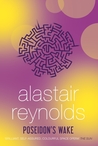
Review: Poseidon’s Wake by Alastair Reynolds

Poseidon's Wake (Poseidon's Children, #3)Poseidon’s Wake by Alastair Reynolds
My rating: 4 of 5 stars

Poseidon’s Wake is the third volume in the Poseidon’s Children series by Alastair Reynolds. The events of this book are set a few centuries in the future from the second book – On The Steel Breeze. The main protagonists are still part of the Akinya clan. We find Mpozi, Goma and Ndege on Crucible and Kanu in the Solar System.

The book explores the results of the arrival of the Watchkeepers and the aftermath of the Mandala event at the conclusion of “Steel Breeze”.

Let me be honest – I found the book hard going, yet worthy of the four stars I have given it. There are long passages meditating on the meaning of life and the role of belief. Stay well clear if you are looking for action scenes or military science fiction. This is very much in the vein of Existence by David Brin. We have a McGuffin – vast alien artefacts on the planet Poseidon. The plot revolves around separate expeditions from the Solar System and from Crucible to the hitherto unvisited system following the receipt of a mysterious transmission.

Along the way, we find the machine civilisation explored in the first two books, we find super intelligent elephants as well as inscrutable aliens. Reading this reminded me of Rendezvous with Rama – it has the similar mix of hard science fiction as well the plot point of humans trying to figure out the motivations of an unknowable alien. It is a fitting conclusion to the series and a book that has stayed with me more than I expected it to.

SIDENOTE – There is one thing I never figured out about these books. Where are the White people? We have a future where all the conversation happens in Swahili, or Mandarin or Portugese – but no English. We have characters that are of different ethnicities, but no WASPS. Whats up with that?

View all my reviews

Review: Daemon by Daniel Suarez

Daemon (Daemon, #1)Daemon by Daniel Suarez
My rating: 3 of 5 stars

TLDR – Daemon starts off as a promising techno-thriller with a somewhat plausible premise but ends up being a run of the mill action roller coaster with killer robots. It’s a fun, if unsatisfying genre piece.

Daniel Suarez knows his domain – contemporary / near future technology and it’s implications. What I am also quite sure about that he has a rather pessimistic view of where things are going. Daemon starts as a crime procedural with a small town cop trying to solve two seemingly unconnected deaths that appear accidental. We quickly find out that there is a rather sinister force behind these deaths. We encounter disenchanted, anarchist-libertarian hackers, mysterious computer programmers who are not quite who they seem, and lots of sinister government types who simply know whats best for everyone.

The key character is the eponymous Daemon – a networked, non sentient computer system that is a dead computer genius’s gift to humanity. The Daemon has very specific plans (though they are never revealed – we will have to wait for the sequel) for humanity and it goes about recruiting brilliant, motivated followers through a variety of somewhat plausible means. We have entertaining descriptions of computer games and call centre software amongst other things. I really enjoyed this, the first half of the book. A particular standout was the police / FBI raid on the dead computer genius’s computerised mansion which I found most satisfyingly and gratuitously violent and explosively entertaining.

The book jumps forward a few months around the half way mark. This is where things get problematic. There are large passages that involve discussions between nameless “important” people in the FBI, CIA, NSA and other alphabet agencies as they wring their hands and try and figure out just exactly what is going on. Yes, we know government bureaucrats are clueless, thank you. The episodic, multi-character structure of the book also becomes a problem here. There are a number of characters who fade in and out. There is a particular character, a FBI special operations type fellow, who must be based on someone the author dislikes. He appears in two long passages, and appears to take a huge amount of punishment: being blown up, burnt, shot at, attacked by killer robots, being thrown off a car, etc. But it is difficult to really care too much because we don’t know anything at all about this particular, long suffering sap. The book builds up to an explosive climax involving a long car chase and,yes, more killer robots.

I enjoyed reading Daemon – just like I enjoy big budget sci-fi / action movies or playing first person shooters. There are some neat touches, cool technology, lots of explosions, and killer robots. But, in keeping with genre tropes, we also get gratuitous violence, paper thin characters, and an inconsistent plot. A strong recommendation for those who like computer games and are anarcho-techno-libertarians. An entertaining and somewhat lightweight read for the rest of us.

View all my reviews

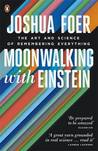
Review: Moonwalking with Einstein by Joshua Foer

Moonwalking with Einstein: The Art and Science of Remembering EverythingMoonwalking with Einstein: The Art and Science of Remembering Everything by Joshua Foer
My rating: 4 of 5 stars

Joshua Foer’s Moonwalking with Einstein

The tag line on the book – “The art and science of remembering everything” is misleading. There is little in the way of prescriptive material here. The book is more of a travelogue and memoir of the years that the author spent and his journey from being a journalist covering a rather nerdy subculture to becoming the somewhat unlikely Memory champion of the USA.

We join Foer as he journeys to the world memory championships and meets a variety of entertaining, eccentric and quite bizarre characters. From the ultra suave and successful memory coach Tony Buzan who runs a global memory empire and wears clothes inspired by seventeenth century sword fighters to the cane wielding English eccentric Ed Cooke who formed a secret society of memory champions whose main purpose seems drinking beer.

This is not a scientific study or a self help book. Rather it is a study of characters and of the people who spend so much time and are completely committed to a rather arcane pursuit of somewhat dubious utility. The author also goes into some detail on the techniques used by champion memorisers such as using memory palaces and associating easily remembered and recalled images to all kinds of data that needs to be memorised. The emphasis here is again on entertainment rather than instructions as we are invited to imagine Claudia Schiffer taking a luxurious bath in a giant tub of cottage cheese on the sofa of the author’s childhood home. Apparently it is easier to remember titillating images than it is to remember chaste ones (who would have thought?).

The author also takes some interesting, if anecdotal diversions into topics such as chicken sexing and an exploration of savants capable of incredible feats of memory. Foer spends time with people who can’t remember their last thought as well as those such as Kim Peek, the savant on whom Dustin Hoffman’s Rain Man was based, who spends his days memorising the phone book. All of the characters are sympathetically portrayed, even those that the author is clearly ambiguous about.

The most enjoyable parts of the book are the ones where the author describes his journey towards becoming a “memory master”. The one image that I will take from this book is that of Joshua Foer sitting in the basement of his parent’s house in his underpants wearing giant industrial earmuffs and safety glasses spray painted black with tiny pinholes attempting to memorise long lists of random numbers.

Moonwalking with Einstein does come out like a mockumentary at times but it is clear that the author respects, even enjoys the company of, this strange brotherhood of unlikely athletes that he came across on his journey. I recommend this short and entertaining book to those who enjoy popular science books and as well as those who enjoy character studies and travelogues in the vein of Bill Bryson.

4 stars out of 5.

View all my reviews

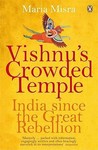
Review: Vishnu’s Crowded Temple by Maria Misra

Vishnu's Crowded Temple: India Since the Great RebellionVishnu’s Crowded Temple: India Since the Great Rebellion by Maria Misra
My rating: 4 of 5 stars

Vishnu’s Crowded Temple is an intriguing take on the history of modern India. As the title indicates, the book focuses on the politics of late British Raj in India and that of the independent Indian state after 1947. This is very much a political history. Ms. Misra offers much food for thought on the impact of caste, class and religion on political life in modern India.

The book is well written and the style is informal and anecdotal. The author tackles a topic that could be rather dull with panache and colour. The best sections of the book are those around the turn of the 20th century. We find befuddled victorian British administrators attempting to categorise and control the Indian electorate as well as a number of ambitious Indian politicians, including M.K. Gandhi, jostling for power and influence with nationhood and independence now a distinct possibility.

The book traces the dominant forces of modern Indian politics from the Hindu reform sects of the nineteenth century to the caste based “reservation politics” in the late twentieth. The period covered by the book encompasses rapid industrialisation, globalisation, two world wars and a tumultuous partition of the Indian subcontinent. The book focuses on political history at the expense of ignoring or skimming some important chapters in Indian history including the relationship with Pakistan and China, separatist movements in Kashmir and the north-eastern states and the impact of terrorism in more recent times. We also don’t get much insight into the everyday life of Indians with the focus on politics and economics.

This is not a good “first Indian history book”. If you are new to India, I would recommend “India: A History” by John Keay or the excellent “India after Gandhi” by Ramachandara Guha. With the great “Tamasha” that is the Indian elections coming up in 2014, Vishnu’s Crowded Temple is an excellent read for those who want to understand more about Indian politics and political attitudes.

View all my reviews

Review: The Shadow of the Torturer by Gene Wolfe

The Shadow of the Torturer (The Book of the New Sun #1)The Shadow of the Torturer by Gene Wolfe
My rating: 3 of 5 stars

My rating : 3.5/5

“The Shadow of the Torturer” is a difficult book to read and to review. The New Sun series of books by Gene Wolfe are often described as the best fantasy ever written. I approached “The Shadow..” expecting to be blown away, but ended up a little baffled and quite intrigued.

The book is narrated by Severian, the titular Torturer. The book is structured as Severian’s memoir written some unspecified time in the future. Severian informs us at the start of his memoirs that he has an eidetic memory. His tale is structured as a series of vividly remembered vignettes that loosely follow Severian’s journey from his time as an apprentice Torturer in the Citadel to his banishment the beginnings of his travels.

You would expect somebody with total recall to be the most objective narrator possible. Yet, following Severian’s story often leaves us perplexed. To put it briefly, things happen to Severian. He behaves like a toy that is wound up and left to rattle across the city of Nessus. He meets characters, gets into and out of difficult situations in strange places, yet emerges unscathed without much comment or reflection. This is not because of poor writing, but at this early stage in the series seems like a clear plot device. I suppose this is the beauty of the book. You know something is up, but it is not clear exactly what and why.

The descriptions of a (post apocalyptic?) Earth are very well done. The city of Nessus, where all the action takes place, is intriguing. It is somewhere in the Southern Hemisphere, and its people live in a monarchial, class based, almost medieval society with some hints of far future technology. Think medieval swordsmen riding genetically modified uber-horses. The story is set in the far future, and the author often throws in passages that convey a sense of decay and melancholy. There are no “information dumps”, and the history of this society is not something that we know about. The “Urth” is as it is, and forms an intriguing background to Severian’s journey.

Since this is the first in a series of books, I will not comment much on the characters. We meet many, but we don’t get to know any of them, since they are all described to us by Severian. He may have total recall, but as the story progresses, he is quite possibly a lousy judge of character. You may find this endearing or irritating. At this stage, I am willing to give the author some leeway.

View all my reviews