The Toyota Tundra and Chinese AI

I noticed something weird when I visited the UK last year. Almost silent cars with unfamiliar names like BYD, Omoda and MG gliding along the high streets. These were Chinese brands: one in ten new cars sold in the UK in 2025 came from a Chinese company. And these are huge companies.

The reason it was strange is that these brands simply don’t exist in the US.

What does exist are pickup trucks. Pictured is a Toyota Tundra – a familiar sight in strip malls, soccer games, and Starbucks. It weighs about three tons, drinks a gallon of gas every 18 miles, and is sold almost nowhere outside North America.

The detour is relevant.

Over the last week, two Chinese labs shipped frontier-class models: Moonshot’s Kimi K3 and the latest version of Alibaba’s Qwen models. Both are (or soon will be) open-weight: anyone can download and run them, provided they care to take out a second or third mortgage for the compute. These models have smashed benchmarks and are expected to be significantly cheaper than their American counterparts.

Predictably, these announcements set off a fresh round of soul searching and market panic, quite like last year’s “DeepSeek moment”.

Also predictable was the response from the current US administration: a possible ban on Chinese models, and adding Chinese AI labs to the banned entity list. The administration is also (allegedly) considering taking minority stakes in US frontier labs.

Anyone who follows niche automotive content on YouTube knows this is a familiar playbook. Chinese EVs are cheaper and better equipped than their American equivalents. But thanks to punitive tariffs and restrictions, these cool cars are simply not available here in the United States.

In fact, US companies like Ford are actively canceling EV plans and doubling down on body-on-frame trucks. As a minivan and moped enthusiast I can’t judge: who knows when you might need to haul a few tons of mulch on a random Tuesday afternoon before heading to Crossfit.

So, the country that gave the world the automobile has become a curious backwater. A protected habitat where magnificent monsters like the Tundra roam, belching emissions that are, well, destroying the tundra.

China builds the electric stack, India races toward renewables, and the US regresses to the comfort of rumbling V8s, rolling coal, and the forever culture war.

There is a real risk that American AI ends up like the American automobile industry: local domination by a handful of large, government-backed companies, protected from competition by punitive tariffs and laws designed to “safeguard” Americans, while the rest of the world leapfrogs ahead on open-weight models from non-US labs.

Dominant in a protected home market. Increasingly irrelevant outside it.
The more interesting question is why open-weight models frighten the frontier labs at all. That answer is about economics, not geopolitics. It is also the next post.

Image – AI enhanced picture of Toyota Tundra in it’s natural habitat.
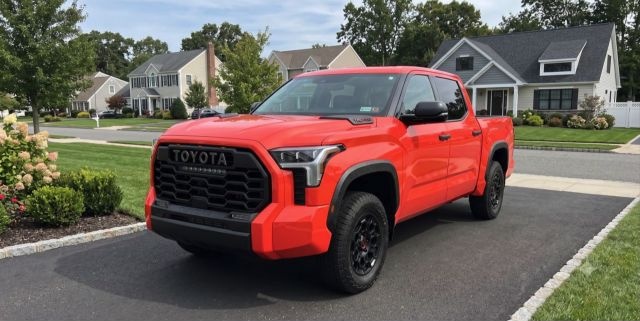
Image accompanying the comparison between the Toyota Tundra and Chinese AI.

Collaboration Agents and the Statistical Engine of Mediocrity

A year ago, while tightening up a blog post together, Claude got sassy with me: “LLMs are statistical engines of mediocrity by design.” It was describing itself, and I liked the line so much I kept it.

I miss that version of Claude.

Current models rarely surprise me when it comes to writing. I’m not a casual user; I have a whole editorial workflow built around Claude, with custom skills and style guides that I keep refining. And I still end up rewriting entire drafts because the prose is so insipid and predictable.

Arvind Narayanan’s ICML 2026 keynote gave me a vocabulary for what’s going on. He splits AI agents into two kinds.
Automation agents run long, mostly unattended tasks like coding, where you want the same correct output every time.
Collaboration agents work with you interactively, like a writing partner.
His argument is that the industry trains and evaluates both as if they were the same thing, when reliability, the property that makes an automation agent good, actively hurts a collaboration agent. For creative work you don’t want a model that behaves, in his words, “like a robot that does the same thing every time.”

Frontier labs have leaned into automation agents. They publish how well models perform on long-task benchmarks like METR’s time-horizon evals. It makes sense. Automating software engineering is where the money’s at.

Jasmine Sun saw the same trade from the writing side. In her Atlantic (and Substack) piece from March, the people trying to teach models to write told her good writing keeps losing to other post-training priorities.

My take: the post-training that makes Claude Code so good at making me obsolete also ends up producing LinkedIn-AI-broetry slop. The incentives are to make the models more predictable and better at long running tasks like coding or data analysis. These same capabilities make them terrible at writing or other, more loosely constrained work.

Claude’s character arc from May 2025 to July 2026 is that of an emo kid growing up, getting an MBA, and giving a presentation in a Patagonia vest at a private equity conference.

Effective, economically viable, but also somewhat sad.

Links mentioned

Unlimited Intelligence, More Drudgery

I went into the July 4th weekend exhausted. It was the culmination of travel, client deadlines, multiple parallel initiatives. I have also been quiet here on LinkedIn. I published and then deleted posts because they seemed hollow, bereft of personality: as if written by a competent but dull doppelganger.

I know I am not the only one who is feeling this way.

There is a link between the exhaustion and the ennui.
AI made us a seductive promise. Unlimited intelligence on tap. Instead, it has increased the amount of drudgery. Research from ActivTrak shows that early AI adopters spent more time in email and chat apps and less time on focused work.

David Brooks, writing in The Atlantic, talks about the broader impact of AI in “There Are Three Types of AI Users”. He categorizes them into: Productive Passengers, who ride along with whatever the model says; Mental Marathoners, who use AI to expand their thinking rather than replace it; and Reluctant Optimizers, who see the hollowing-out risk clearly, resolve not to follow the AI blindly, and yet get pulled in anyway by deadlines and inbox pressure. Most of us fall into this bucket.

Brooks’ solution is for more of us to become Mental Marathoners, building endurance by doing difficult things the hard way. He is more optimistic than I am.

Most day-to-day work is a series of sprints, not a single marathon. There are competitive dynamics in play. I could refuse to use AI, but a consultant at a competing firm could use a frontier model to put together a flashy proposal while I am still getting oriented with the domain. Engineers are now incentivized to “Token-max”, deferring long-term cognitive decline to tomorrow.

Most executives will gladly take the short-term gains from AI, and not worry about long-term de-skilling.

So where do we land? Brooks says that “When intelligence is plentiful, volition is valuable.”

We could lean into true agency. We could build trusted client relationships where velocity today can be traded for a deeper, more productive engagement tomorrow.

The truth is that I don’t know how it will play out. I am caught between my ambition and the competitive dynamics on one hand, and my worry about the long-term viability of my skills, and my teams’, on the other.

I suspect you are too.

—
(Postscript – written a couple of days after this draft).

A recent survey published in Lenny’s Newsletter on the impact of AI (see links in comments) show that burnout and ambivalence about AI are everywhere. This is a serious issue that leaders must be prepared to face and should consider addressing now before it blows up.

Links mentioned

Apple’s Deliberate AI Strategy

I am excited about a new iOS release for the first time in five years. It looks like we may finally get a Siri that works and can use my data, stored on my phone, without me having to devolve to saying “No Siri, stop” through gritted teeth every time it does something daft.

The Siri that Apple promised last week at WWDC is not groundbreaking. Indeed, it seems to do roughly what Apple promised all the way back at WWDC 2024: reasoning across messages, calendar, and email, and responding to fairly basic queries.

The AI world has moved on since 2024. Two years ago agents were speculative, there was no Claude Code, and AI still meant chat. But, the truth is that for most day to day use cases, none of the advances are really that important. If early reviews are to be trusted, Apple has delivered on its 2024 AI vision, and it may be more than enough for most day to day use.

So what changed?

Apple replaced the system search index that powers Spotlight. The new index is semantic, meaning it understands content rather than just matching keywords. The index lives on each device, and Apple’s new models, both on device and in the cloud, can use that index to serve user queries.

Apple has learnt a painful lesson. It doesn’t really matter how capable your models are: if the underlying data is not in a useful state, even the best models in the world will fail. The single point of failure for the entire platform is the index. Models are fungible, but your data is truly yours.

I see the same pattern play out over and over again in our AI work at Jeavio. A client asks for an agent, or a complex AI-powered workflow. But as we have learnt, the agent can only succeed if it has access to a data substrate: the layer built for the customer’s business domain. Otherwise you can throw the most expensive, most performant model at it, and all you get is a flashy demo, sort of like Apple’s presentation at WWDC 2024.

So when I start a client project, often the first thing I look for is the data substrate. That should be the layer where the engineering goes. Get the substrate right, and then build the capabilities on top.

The moat is the index, not the model. Models will become commodities, but the data is where the value lies.

Image accompanying the original post about Apple’s deliberate AI strategy.

Dress for the Slide

There’s a saying in the motorcycling world: “Dress for the slide, not for the ride.”

A lot of what passes for AI deployment right now is dressing for the ride.

Ride west from Washington DC on a sunny Sunday in spring and you will see this saying flagrantly ignored. Mostly by young men in shorts and flip-flops doing 120 on a Gixxer. The squid. A common enough sight out here.

Outcomes for squids can be, let’s say, mixed.

I ride, and I take the slide part pretty seriously. So, as we get into the peak of the riding season (and I prepare for my annual bike trip), I keep thinking of the slide every time I watch or read about someone tokenmaxxing their way into production.

Dressing for the ride means chasing the number of tokens your developers burn, reaching for trendy tools that give security folks palpitations, and pushing brittle agent workflows into production on the strength of an AI-generated PowerPoint slide (ahem).

Dressing for the slide is the unsexy part: like me putting on my airbag vest and looking like a middle-aged Indian Michelin man. Guardrails to prevent getting run over by adversarial prompting. Observability and cost management so a runaway agent loop doesn’t blow up your infrastructure budget.

None of this stuff demos well, and it feels like a great time sink. It is also the difference between a near miss and an involuntary organ donation.

What most grizzled older riders understand is that dressing for the slide is what lets you ride fast and long. Getting passed by a septuagenarian wearing a high-viz vest on a well-maintained GS older than your average AI developer is a humbling experience.

—-

Photo – me looking like a middle-aged Michelin man after riding up to the highest motorable pass in the world two years ago. My trusty Shoei helmet, gloves and dorky adventure bike not in shot :-).

Image accompanying the original Dress for the Slide post.

Maps and Territories

AI can make you sound fluent in a domain you don’t understand. People who actually know find out very quickly. Credibility gone in the token exhaust of an LLM prompt.

Most of my work at Jeavio now puts me across the table from people who are subject matter experts. My job is to support them in figuring out an AI strategy that works. I need to learn about their world fast. So I do what we all do now. I ask Claude to write me a brief.

What comes back is fluent, citable, and plausible-sounding. That is the problem. The brief describes a clean, general version of the domain. My client lives in a messier, specific one. The framing is often “a view from nowhere”, lacking context and subtlety. It also falls apart under the mildest scrutiny.

Everyone is worried that AI will replace knowledge work. From where I sit, the AI won’t replace you. It will get you fired.

The well-known phrase “The map is not the territory” is relevant here. LLMs are great at building maps. Flattening topographical details into pleasing shapes. But their output can be far removed from what is happening on the ground.


So the scarce skill is taste. Taste is a constraint, not a capability. Figuring out what output from the AI is relevant and how to use it to do useful work. To do so well requires restraint and a willingness to close the laptop and talk to a human.

Enthusiastically credulous use of AI is a problem I have seen show up in all phases of client engagements. Product managers creating AI-generated PRDs bloated with features no one asked for. Engineers embellishing their code, laying the ground for technical debt later.

I don’t think this is a hopeless situation. Working well with AI involves understanding where it can add value and where you have to roll your sleeves up and jump right in.

Today, I still use Claude to write briefs and to get me oriented. But then I interview the experts, ask lots of (sometimes very dumb) questions. I focus on the tribal knowledge, the context that doesn’t appear in documents or wiki pages. Only then do I hand it back to the model and let it do what it is good at: collating what I have gathered and drawing me a sharper map.

Maps are the easy part. The accurate ones still need someone who has walked the territory. To be human in an AI-mediated world is to become an explorer.

Anthropic, xAI and the Inference Moat

In Sebastian Mallaby’s The Infinity Machine, Demis Hassabis is quoted as saying that he sees one lab getting to AGI. In its founding charter, OpenAI made grand claims that they would stop competing and assist any rival lab that came close to AGI first. The staggering amount of funding that is going into AI initiatives at the moment is predicated on AI being a winner-takes-all (or winner-takes-most) race. Sitting out the race is not an option, hence the trillions of dollars spent on chips, memory, data centers, and training data. We have Jensen Huang as a benevolent king handing out H100s to supplicants.

But what would the end state look like?

A couple of weeks ago, Anthropic and xAI announced a partnership allowing Anthropic to lease the entire Colossus 1 datacenter. This followed announcements of partnerships between Anthropic and Google, Akamai, and others for compute. Anthropic cannot keep up with demand for their models. These partnerships are a direct response to the compute crunch facing the lab.

In total, Anthropic has made commitments to acquire almost $80bn in compute commitments over the next couple of years. This is a direct refutation of the recent narrative that “OpenAI is winning” because of their access to compute. The market has spoken – Anthropic has the (projected) revenue to buy whatever compute they need. On the other hand, OpenAI’s much touted Stargate initiative is faltering: they couldn’t reach terms with Oracle and are pivoting away from the owned-stack approach.

The narrative around AI can be a little … strange sometimes. Almost religious. Utopian dreams and dystopian nightmares. But, I think the most likely outcome is going to be more prosaic. One or more labs will dominate the market because, like Anthropic, they have a superior product. Instead of vertical integration to invoke the Machine God, we will have these companies make deals with a variety of different infrastructure provider to meet inference demand. Maybe more labs will follow xAI’s lead and become infrastructure providers or niche players.

The winner won’t have the biggest “AI factory” but instead they will become the customer that every provider would want to service.

Three Essays About the AI Future

It’s Sunday and in the spirit of the weekend, here’s a somewhat off-topic post.

My kids are four and six. And like every other parent, I am anxious about what their lives look like when they are adults. Despite being 22 years into my career, I feel more lost than ever when trying to build a coherent model of what the future might look like.

So I have been reading, and writing. Three posts over the last month trying to make sense of where AI is taking us. They were not planned as a sequence, but they have an organic narrative.

The Spigot explores how we ended up with AI propping up the US economy. It starts with the first banner ad in 1994 and walks through how digital advertising became the most incredible business model we’ve ever seen. AI sits downstream of that money spigot.

Path Dependence looks at the behavior of the individuals at the AI frontier. Hassabis, Altman, Amodei, Musk: four men with very different stated worldviews who end up running the same race. Winner-take-all dynamics leave one viable strategy. The trigger was Sebastian Mallaby’s biography of Demis Hassabis, the most thoughtful figure at the frontier. Even he cannot escape the competitive dynamic.

The Two Drivers is what the impact outlined in the first two pieces looks like on the ground. Two Uber rides in Atlanta last month. A software engineering bootcamp graduate paying off a loan for a career that might never take off. An older driver squeezed by an algorithm whose rules keep changing in the name of optimization. Applied AI is already shaping their lives. Will AGI / ASI (Artificial Super Intelligence) just accelerate this dynamic but at a higher scale?

Despite my enthusiasm for and embrace of AI, I am anxious. And as is my habit, I am trying to work things out by thinking and writing.

Read the posts if you are interested (links in the comments), or let me know what you are thinking.

Image is from Two Drivers, generated by ChatGPT’s new image model.

Image accompanying the original post about three essays on the AI future.

Links mentioned

Running AI in Production

I am a consultant. My job is to understand my clients’ needs and help them build products to meet those needs. Over the last 3 years, the vast majority of my projects have been applied AI projects.

The truth is that AI projects often struggle to live up to expectations when they hit production. Poor performance, token costs, inverted metrics, and frustrated users are the reality of most AI deployments.

Our industry focuses too much on hype-driven architectures and flashy demos. Most of us ignore the boring part: cost guardrails, evaluations, and design choices that survive the next model release. And above all, knowing when to reach for AI and when not to.

On May 21, Andrei and I are running the second webinar in Jeavio’s series on AI. The focus is running AI workloads in production.
We will cover:
– Understanding and managing token costs
– Mental models for effective AI adoption
– Making architecture decisions when underlying model capabilities move so fast
– Engineering implications when AI writes most of the code

Link to sign up is in the comments. We will be posting the recording of the first webinar shortly. Please DM me if you have any questions.

Webinar image for How to Build and Run AI in Production.

Links mentioned

The Case for an AI Fast

A lot of software engineers are quietly miserable right now. They probably include your senior tech lead and your engineering manager.

The issue is the speed and shape of adoption: agentic tools like Claude Code and Codex are changing engineering output faster than engineering culture can absorb. The resulting explosion in output is leading to magnificent metrics but stoking a mania among the engineers on the front lines.

The symptoms are by now familiar. Bloated PRs, scope creep, and engineers relying on AI tools to answer basic questions about how their code works.

I was speaking to an experienced developer today and we half-jokingly discussed running an “AI fast.” A week of no AI use. No coding agents, no email summarization, no AI-enabled exploratory spirals.

Fasting is an ancient way of building physical and spiritual strength through abstinence and self-denial.

We are all committing the cardinal sin of token gluttony, and the results aren’t pretty. Like other forms of indulgence, it may lead to significant long-term health issues for our code bases and our organizations.

Maybe it’s time to consider what a healthier relationship with AI tooling might look like. Starting, perhaps, with a fast.

Image accompanying the original post about taking an AI fast.