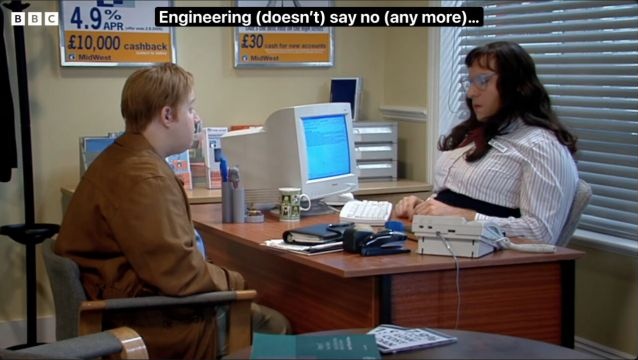
There is a skit from the early 2000s BBC show Little Britain called “computer says no.” A bank teller responds to a customer trying to get a loan with the same refrain, regardless of the request.
Product managers used to operate inside a similar dynamic when negotiating scope with engineering. Engineering time was a precious resource. Writing code was expensive and time-consuming. So the default answer when discussing new features was often “engineering says no.”
AI-assisted coding has been a series of inversions. This is yet another. Writing code is no longer the bottleneck, which means engineering’s “no” becomes less common and a little less credible. The friction that gave the negotiation its shape is gone. The consequence falls on product management.
“Taste” is the key skill in the AI era. For product managers, discipline is the flip side of taste. The discipline to say no to their clients without the cover of “engineering says no.”
The framing around product decisions shifts from “we should build this, but we can’t” to “we **could** build this, but **should** we?”
Developing a thesis about what a product shouldn’t be becomes as important as the one about what the product should be.
Experienced product managers already do this. But they were brought up in an age of scarcity. They knew what to suggest to engineering teams because they had hard-won mental models of capability, capacity, and constraints. Product managers coming up in the AI age face an era of plenty. They will need to develop restraint instead.
Product management used to be an additive discipline: more requirements, expanded stories, negotiating for more resources. Now it becomes subtractive.